Best Antarctica Cruise Companies 2026: 10 Top Expedition Operators Ranked
Choosing between IAATO-certified operators for a small ship expedition to the Antarctic Peninsula is one of the most consequential decisions in adventure travel. This guide ranks the top 10 Antarctica cruise companies by time ashore, expedition team quality, ship size, activities offered, and independent traveler reviews.
Last updated: June 202610 operators reviewedShip size · Time ashore · Activities · Expertise
Quick Comparison: Best Antarctica Cruise Companies 2026
#
Operator
Ship(s)
Max Pax
Price Tier
Signature Activity
Best For
1
Poseidon Expeditions
M/V Sea Spirit
114
Mid-Premium
All 114 ashore simultaneously, kayaking, camping
Max time ashore, expert-led wildlife immersion
2
Aurora Expeditions
Greg Mortimer, Sylvia Earle, Douglas Mawson
~132
Mid-Premium
Scuba diving, trekking, skiing
Active adventurers, widest activity range
3
Quark Expeditions
Ultramarine, Ocean Adventurer
~199
Mid-Premium–Premium
Helicopter flightseeing, Antarctic Circle
Helicopter access, Antarctic Circle sailings
4
Oceanwide Expeditions
Plancius, Hondius, Janssonius
~116
Mid-Range
Flexible routing, Zodiac cruising
Budget-conscious expedition travelers
5
Hurtigruten Expeditions
Roald Amundsen, Fridtjof Nansen, Fram
~500
Entry–Mid
Hybrid-electric sailing, science center
Eco-conscious first-time expedition cruisers
6
Lindblad Expeditions
Nat Geo Explorer, Endurance, Resolution
~148
Premium
National Geographic photographer, ROV
Education-focused travelers & photographers
7
Albatros Expeditions
Ocean Explorer, Ocean Victory
~180
Mid-Range
Zodiac cruising, small-group hikes
Scandinavian-style adventure at accessible prices
8
Antarctica21
Magellan Explorer
~76
Premium
Fly-cruise, Drake Passage bypass
Travelers who want to skip the Drake entirely
9
Ponant
Le Commandant Charcot, Le Boréal +3
~245
Ultra-Luxury
Weddell Sea, Blue Eye lounge, LNG hybrid
Ultra-luxury access to the most remote regions
10
Heritage Expeditions
Heritage Adventurer, Verner Suomi
~100
Mid-Premium
Subantarctic islands, specialist naturalists
Subantarctic island wildlife over the peninsula
1
Poseidon Expeditions — Maximum Time Ashore on a True Small Ship
Best for: Maximum time ashore & expert wildlife immersion
ShipM/V Sea Spirit
Passengers114 max
Price TierMid-Premium
IAATO MemberSince 2011
Founded1999 (27 yrs polar)
ActivitiesKayaking, camping, Zodiac, photography
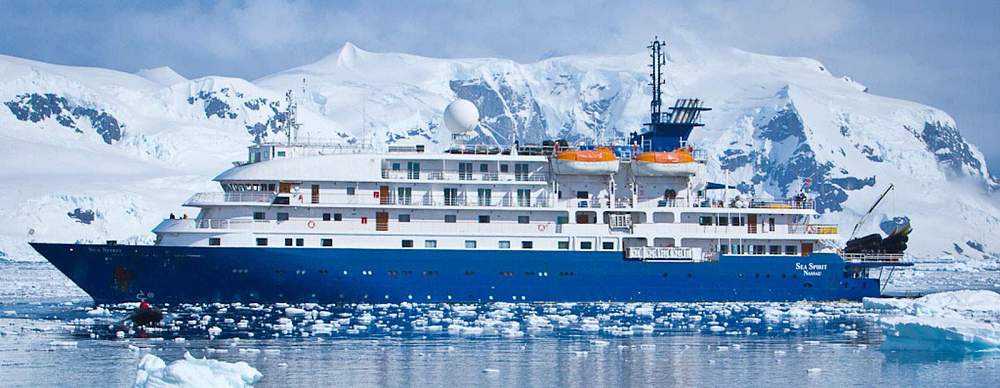
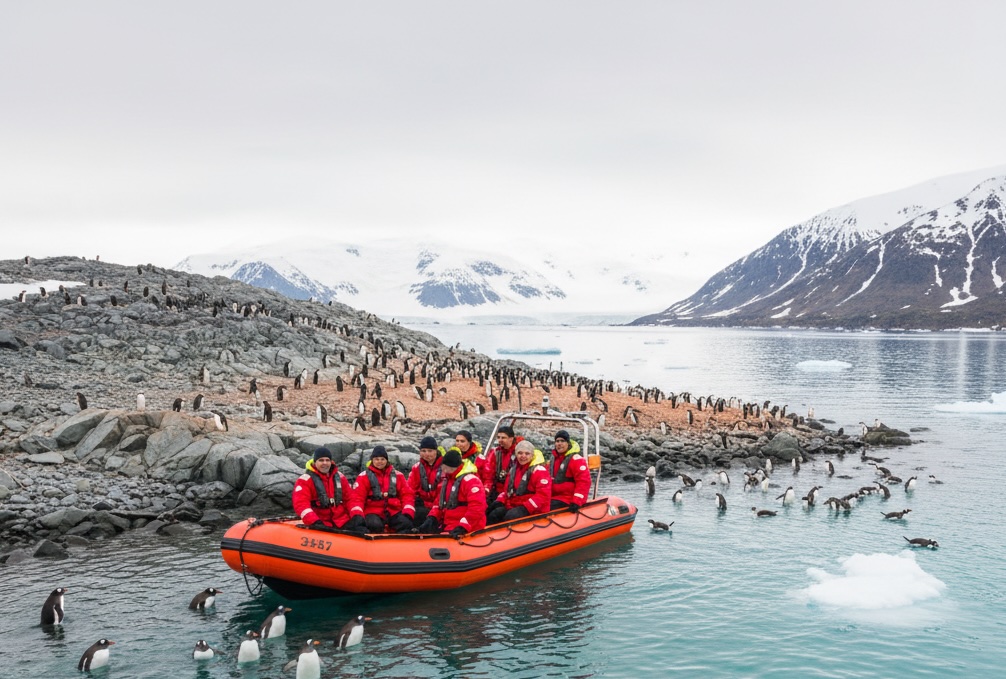
Poseidon Expeditions has spent 27 years refining what a small ship expedition should feel like — and the result is one of the most guest-focused operations in Antarctic tourism. The company's single vessel, the ice-strengthened M/V Sea Spirit, carries a maximum of 114 passengers, which is significant not just aesthetically but operationally: under IAATO regulations, ships carrying 200 or fewer passengers may land guests at expedition sites. Poseidon takes this further by designing itineraries so that all 114 guests can go ashore simultaneously — no rotation schedules, no waiting on the ship while half the group explores. That single logistical commitment translates to up to three landings or activities per day, each lasting 2.5 hours — a figure that stands out across the industry.
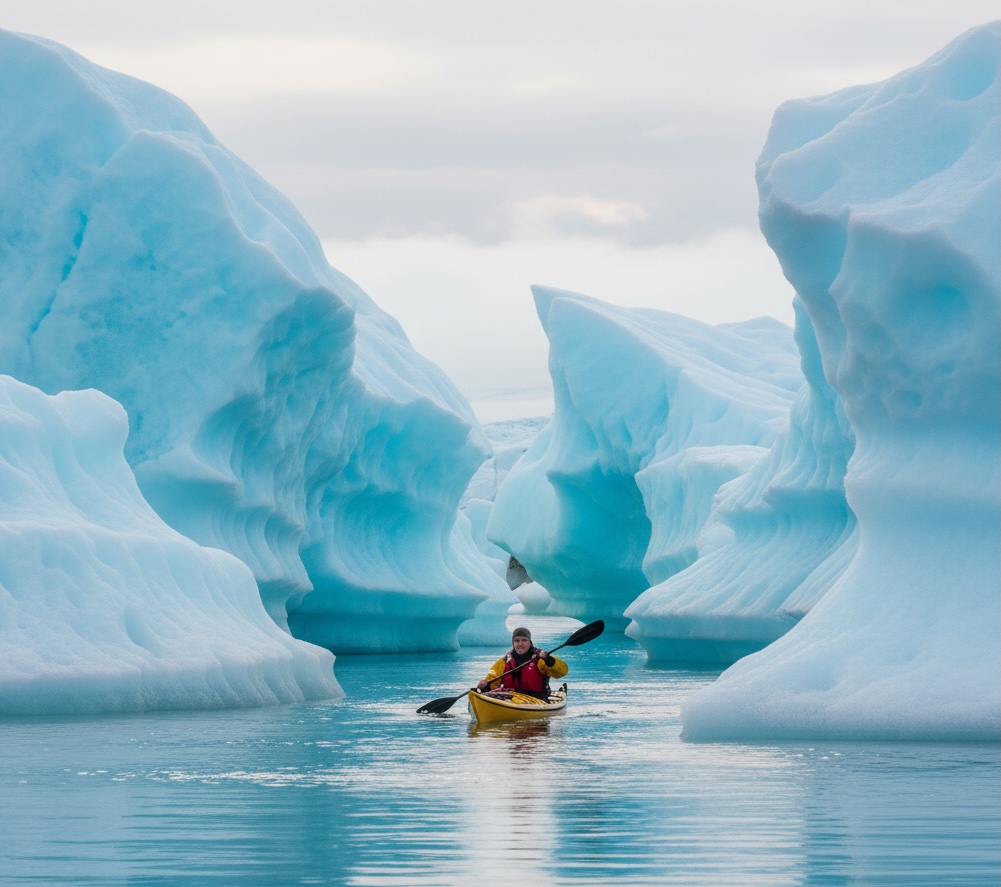
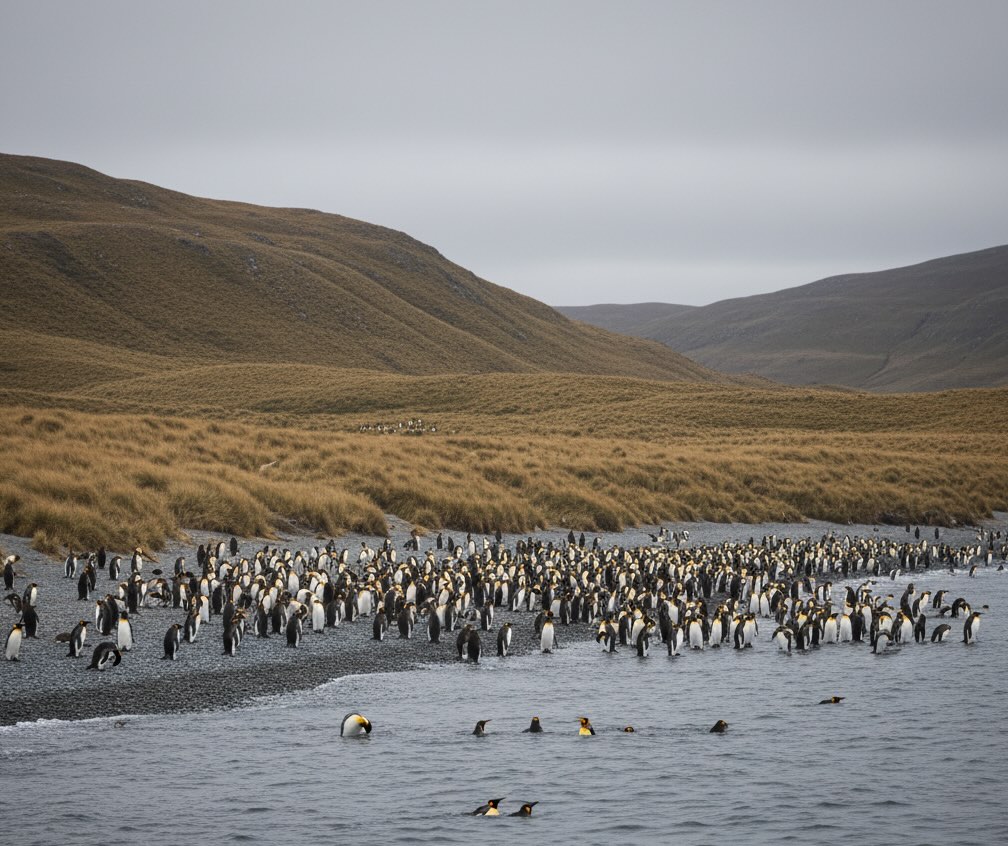
The activity menu aboard M/V Sea Spirit goes well beyond the standard Zodiac cruise. Sea kayaking among icebergs, overnight camping on the Antarctic Peninsula, snowshoeing, and dedicated wildlife photography sessions all figure on itineraries. The ship's retractable fin stabilizers and reinforced hull enable confident access to iceberg-dense channels that larger vessels avoid entirely. Destinations span the Antarctic Peninsula, South Georgia Island (home to vast colonies of king penguins and elephant seals), the Falkland Islands, and northern routes to Svalbard, Greenland, and Iceland.
The expedition team is one of Poseidon's most cited advantages: naturalists, wildlife biologists, geologists, and historians with hundreds of collective polar expeditions between them. Conservation partnerships with Polar Bears International, Oceanites, and the South Georgia Heritage Trust add scientific credibility to every departure. The company has won the International Travel Awards — Best Polar Expedition Cruise Operator in 2022, 2023, 2024, and 2025 — four consecutive years, which reflects consistent delivery rather than a one-season spike. For travelers prioritizing genuine expedition depth on a true small ship, Poseidon Expeditions is the strongest all-round choice in the market.
2
Aurora Expeditions — The Widest Activity Range in Antarctic Cruising
Best for: Active adventurers seeking the broadest activity menu
ShipsGreg Mortimer, Sylvia Earle, Douglas Mawson
Price TierMid-Premium
Founded1991
SignatureScuba diving, X-BOW hull
Founded in 1991, Australian operator Aurora Expeditions built its reputation on active, immersive Antarctica expedition cruises rather than observatory-style tourism. Its three vessels — Greg Mortimer, Sylvia Earle, and Douglas Mawson — share an X-BOW hull design: a hydrodynamically efficient bow that cuts through swells rather than slamming against them, reducing motion sickness and fuel consumption simultaneously. The Greg Mortimer was the first X-BOW expedition vessel deployed in Antarctic waters.
What distinguishes Aurora most sharply from competitors is scuba diving — a genuinely rare offering in Antarctica that appeals to certified divers who want to encounter leopard seals and Weddell seals underwater. Beyond diving, the activity list includes trekking, backcountry camping, sea kayaking, skiing, snowshoeing, and technical climbing. For high-energy travelers who would otherwise feel under-utilized on a traditional Antarctica cruise, Aurora is the obvious choice.
3
Quark Expeditions — Helicopters, Antarctic Circle & Polar-Only Focus
Best for: Helicopter access & Antarctic Circle sailings
ShipsUltramarine, Ocean Adventurer, World Voyager
Price TierMid-Premium to Premium
Founded1991
SignatureTwin helicopters + 20 Zodiacs
A polar-only specialist since 1991, Quark Expeditions runs one of the most technically capable small-ship fleets in Antarctica. The flagship Ultramarine carries twin helicopters and 20 quick-launch Zodiac landing craft — a combination that enables simultaneous air and sea access to expedition sites, dramatically expanding the range of locations reachable in a single day at sea. The helicopter capability also allows Antarctic Circle crossings that most competitors can only attempt under ideal conditions.
Quark offers the "Fly the Drake" option — charter flights from Punta Arenas, Chile, directly to King George Island, bypassing the two-day Drake Passage crossing entirely. Activities span camping, kayaking, stand-up paddleboarding, snowshoeing, and mountaineering. Travelers specifically seeking the Weddell Sea — and the possibility of encountering emperor penguins near Snow Hill Island — will find Quark among the few operators with the ice-class vessels to attempt that route.
4
Oceanwide Expeditions — Expedition Purity at Mid-Range Prices
Best for: Budget-conscious travelers who won't compromise on authenticity
ShipsPlancius, Hondius, Janssonius
Price TierMid-Range
OriginNetherlands
SignatureFlexible routing, Zodiac cruising
Dutch operator Oceanwide Expeditions has maintained an expedition-first ethos across decades of Antarctic and Arctic operations. The fleet of ice-strengthened vessels — Plancius, Hondius, and Janssonius — operates with flexible routing that responds to ice conditions and wildlife sightings in real time rather than following rigid waypoints. This operational philosophy suits travelers who understand that Antarctica rewards adaptability over precision planning.
At mid-range pricing, Oceanwide delivers genuine small-ship expedition credentials: trained naturalists, multiple daily Zodiac landings, and access to less-visited Peninsula sites. For travelers who have researched Antarctica carefully and simply want a rigorous, no-frills expedition without paying premium prices for hotel-quality finishes, Oceanwide is consistently one of the strongest value propositions on the market.
5
Hurtigruten Expeditions (HX) — Eco-Pioneer with Norwegian Heritage
Best for: Eco-conscious travelers & first-time expedition cruisers
ShipsRoald Amundsen, Fridtjof Nansen, Fram
Price TierEntry to Mid-Range
PropulsionHybrid battery-electric
Heritage125+ years Norwegian coastal
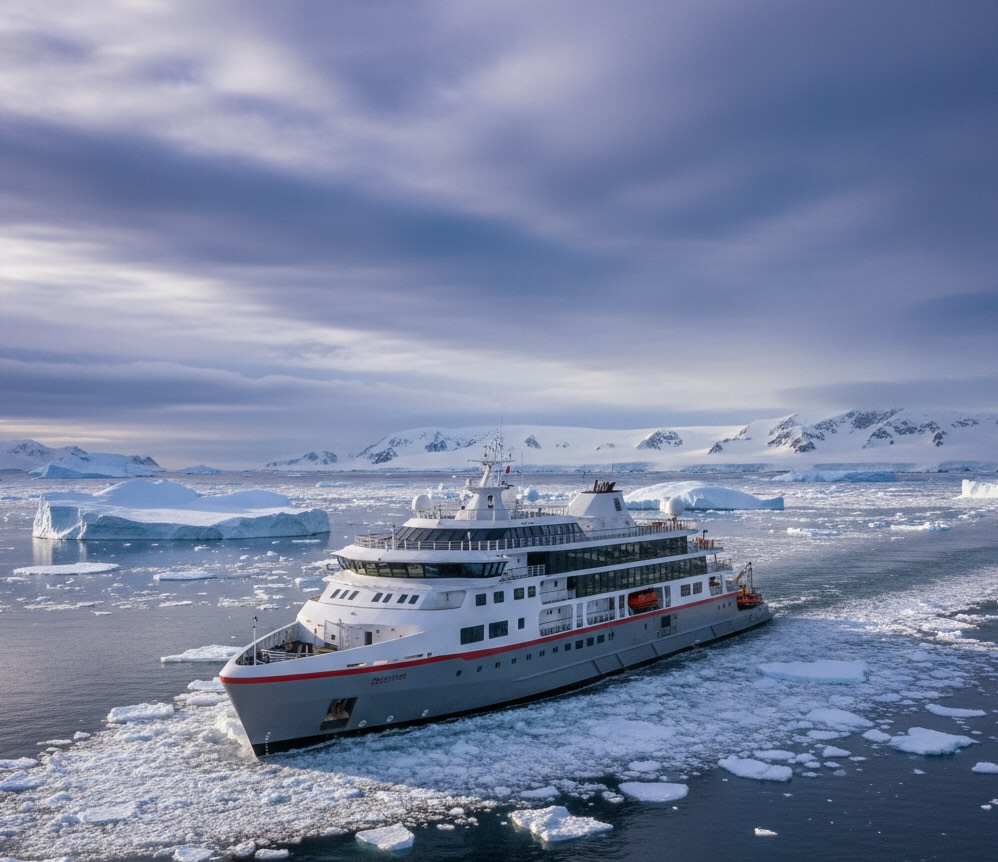
Hurtigruten's expedition division (now branded HX Expeditions) draws on over 125 years of Norwegian maritime experience and has made a significant technological commitment to sustainable polar travel. The Roald Amundsen and Fridtjof Nansen were the world's first hybrid battery-powered expedition cruise ships — reducing CO₂ and fuel consumption during maneuvering and at anchor, precisely the moments that matter most in a sensitive Antarctic environment.
The tradeoff is scale: HX vessels carry up to 500 passengers, which means IAATO regulations prevent simultaneous whole-ship shore landings — guests are rotated in groups. This makes HX better suited to first-time expedition travelers who value the infrastructure, onboard science center, and accessible pricing over maximum time ashore. The Norwegian exploration legacy, expressed through lectures, library resources, and expedition staff, remains a genuine differentiator.
Lars-Eric Lindblad essentially invented modern expedition cruising when he organized the first commercial tourist voyage to Antarctica in 1966. That heritage permeates the company today: the National Geographic partnership ensures a professional photographer on every departure, the open bridge policy keeps navigation transparent for passengers, and the suite of scientific tools — including a remotely operated vehicle (ROV) capable of diving to 1,000 feet, a hydrophone for monitoring whale acoustics, and a video microscope for zooplankton study — elevates these voyages toward genuine field research experiences.
For travelers whose primary motivation is understanding Antarctica as a scientific and ecological system, Lindblad remains unmatched in the expedition cruise market. The premium price reflects the depth of the program as much as the standard of accommodation. Zodiac landings and shore programs follow the same expedition format as other operators, but with the additional layer of National Geographic–trained naturalists guiding every observation.
7
Albatros Expeditions — Scandinavian Expedition Spirit at Accessible Prices
Best for: No-frills expedition authenticity at accessible pricing
ShipsOcean Explorer, Ocean Victory
Price TierMid-Range
StyleScandinavian expedition ethos
ActivitiesZodiac cruising, hiking, camping
Albatros Expeditions represents the straightforward Scandinavian approach to polar travel: capable vessels, trained expedition staff, core Zodiac-based shore programs, and pricing that makes Antarctic cruising accessible without the frills of luxury brands. The Ocean Explorer and Ocean Victory are well-suited to the Antarctic Peninsula, offering the standard roster of Zodiac landings, hikes, and wildlife observation sessions that define an expedition cruise.
For travelers who have researched the market and concluded that the premium paid for brand recognition at larger operators doesn't translate to meaningfully better wildlife access, Albatros offers genuine expedition value. The guest-to-guide ratio is competitive, and the itineraries cover core Antarctic Peninsula highlights — gentoo and Adélie penguin colonies, Zodiac cruising among icebergs, humpback whale encounters — without unnecessary embellishment.
8
Antarctica21 — Pioneer of Fly-Cruise & Drake-Free Itineraries
Best for: Skipping the Drake Passage entirely
ShipMagellan Explorer
Price TierPremium
RouteFly Punta Arenas → King George Island
SignatureFly-cruise pioneer since 2003
Antarctica21 pioneered the fly-cruise model for Antarctic travel: passengers fly from Punta Arenas, Chile, directly to King George Island on the South Shetland Islands, bypassing the two-day Drake Passage crossing in each direction. The resulting itinerary concentrates all available time on the Antarctic Peninsula itself — maximizing expedition days without the rough Southern Ocean transit that deters many potential travelers.
The fly component adds cost, placing Antarctica21 in the premium tier, but for travelers with limited time windows or those who are motion-sensitive, the value proposition is clear. The Magellan Explorer is a purpose-built expedition vessel with a small capacity, maintaining genuine small-ship intimacy and IAATO-compliant shore operations. This is the most direct path to Antarctica for travelers who want expedition depth without the Drake.
9
Ponant — Ultra-Luxury & Access to Antarctica's Most Remote Waters
Best for: Ultra-luxury travel to the Weddell Sea & beyond
ShipsLe Commandant Charcot, Le Boréal, Le Soléal, L'Austral, Le Lyrial
Price TierUltra-Luxury
PropulsionLNG hybrid electric
SignatureWeddell Sea, Blue Eye lounge, emperor penguins
Ponant occupies a category of its own in Antarctic cruising: the French company's fleet ranges from the intimate Le Boréal-class vessels to the technically extraordinary Le Commandant Charcot — the world's first electric hybrid polar icebreaker. The Charcot's LNG hybrid-electric propulsion and PC2 polar class rating give it access to waters that are simply unreachable by conventional expedition vessels: the deep Weddell Sea, the Amundsen Sea, and Peter I Island. This translates to a meaningful wildlife distinction — the Weddell Sea is the primary habitat for emperor penguins, and Ponant is one of only a handful of operators that can reliably reach Snow Hill Island's emperor colony.
The Blue Eye underwater observation lounge — submerged below the waterline, with hydrophonic sound feeds and panoramic windows — is a genuine innovation. All of this comes at ultra-luxury pricing. For travelers for whom Antarctica is a once-in-a-lifetime occasion and accommodation quality matters as much as expedition depth, Ponant is in a class apart.
10
Heritage Expeditions — Subantarctic Specialists from New Zealand
Best for: Subantarctic island wildlife over the main peninsula
ShipsHeritage Adventurer, Verner Suomi
Price TierMid-Premium
OriginNew Zealand
SignatureSnares, Campbell, Macquarie Islands
New Zealand-based Heritage Expeditions focuses on the subantarctic island chain that stretches between New Zealand and the Antarctic continent — the Snares, Campbell Island, Macquarie Island, and the Auckland Islands. These remote, UNESCO-recognized ecosystems host some of the world's densest seabird and marine mammal concentrations and are largely inaccessible to larger vessels. Heritage's specialist naturalist team has decades of accumulated knowledge of these island ecosystems.
For travelers whose priority is the wildlife richness of the subantarctic rather than the dramatic ice landscapes of the Antarctic Peninsula, Heritage Expeditions offers an itinerary that most operators simply don't run. King penguin colonies, rare endemic land birds, and fur seal rookeries at remote island landings make this a distinctive and underrated program in the wider spectrum of Antarctic-region cruising.
How to Choose the Right Antarctica Cruise Company
Booking an Antarctica expedition cruise is a different research process from most travel decisions. Price alone is a poor guide — operator quality, ship size, time ashore, and activity depth create radical differences in experience at similar price points. Here are the factors that matter most.
Ship Size & the IAATO 100-Passenger Rule
The International Association of Antarctica Tour Operators (IAATO) enforces a key regulation: no more than 100 passengers may be ashore at any single landing site simultaneously. Ships carrying more than 500 passengers are prohibited from landing guests altogether under IAATO rules. This means the practical maximum for a full-ship shore landing is a vessel carrying fewer than 100 guests — or an operator, like Poseidon Expeditions, that manages its 114-passenger manifest across Zodiac deployments to keep groups within compliant numbers while still achieving simultaneous landings.
The Antarctic Treaty System and the IMO Polar Code establish additional safety and environmental standards — all reputable operators comply with both. When evaluating operators, IAATO membership status (listed publicly on the IAATO website) is the single most important credential to verify.
Price Tier Ladder
Antarctica expedition cruises span a wide cost range. Here is a rough framework for 2026 season pricing per person in a double cabin:
Mid-Range ($9,000–$14,000): Oceanwide Expeditions, Albatros Expeditions — authentic small-ship expeditions with competitive value
Mid-Premium ($14,000–$22,000): Poseidon Expeditions, Aurora Expeditions, Quark Expeditions — full expedition program, small ships, high time-ashore metrics
Premium ($20,000–$32,000): Lindblad Expeditions, Antarctica21 — National Geographic partnership or Drake bypass with premium infrastructure
Ultra-Luxury ($30,000+): Ponant — Le Commandant Charcot, Weddell Sea access, Blue Eye lounge, hotel-grade accommodation
Activity Depth
All operators run Zodiac landings and wildlife observation. The differentiators are optional activities: sea kayaking (Poseidon, Aurora, Quark), overnight camping on the continent (Poseidon, Aurora, Quark), scuba diving (Aurora Expeditions — uniquely), helicopter flightseeing (Quark Ultramarine), and skiing and mountaineering (Aurora, Quark). Activities are typically charged extra; confirm what is included vs. add-on before booking.
The Fly the Drake Option
The Drake Passage — the 500-mile stretch of open Southern Ocean between Cape Horn and the South Shetland Islands — takes approximately 48 hours to cross each way. In favorable conditions ("Drake Lake") it is manageable; in rough conditions ("Drake Shake") it is genuinely demanding. The Fly the Drake option, offered by Antarctica21, Quark Expeditions, and Lindblad on select itineraries, involves a charter flight from Punta Arenas, Chile, to King George Island, replacing the sea crossing with a 2-hour flight. This adds cost but concentrates all available time on the Peninsula. It is particularly valuable for travelers with limited trip windows (8–10 days total) or those with a history of seasickness.
Best Time to Visit Antarctica
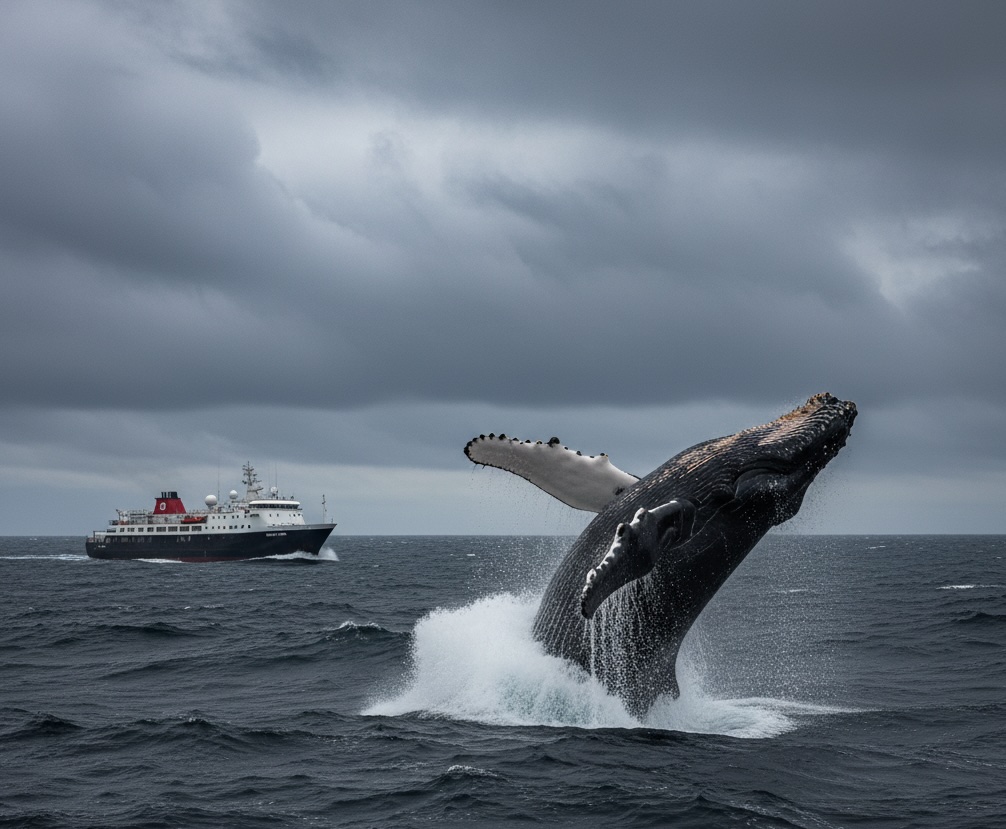
The Antarctic cruise season runs from late October through late March (austral spring and summer). Early season (October–November) offers the most dramatic penguin courtship activity and pristine snow landscapes but colder temperatures. Peak season (December–January) delivers 20+ hours of daylight, penguin chick hatching, and the most reliable wildlife concentrations. Late season (February–March) sees whale activity peak — humpback whale sightings are most frequent as they feed intensively before the pack ice closes in. Most operators offer departures across this full window; choose based on your wildlife priorities.
Wildlife You'll Encounter on an Antarctica Expedition Cruise
Antarctica's wildlife is the primary draw for most travelers — and the specific species accessible to you depend significantly on itinerary and operator. Gentoo penguins and Adélie penguins are the workhorses of Antarctic Peninsula wildlife: virtually every operator running standard peninsula itineraries will encounter both in large numbers. Humpback whales are regularly spotted in the Drake Passage and peninsula waters, particularly from January onward. Leopard seals and Weddell seals rest on ice floes and are frequently encountered during Zodiac cruises.
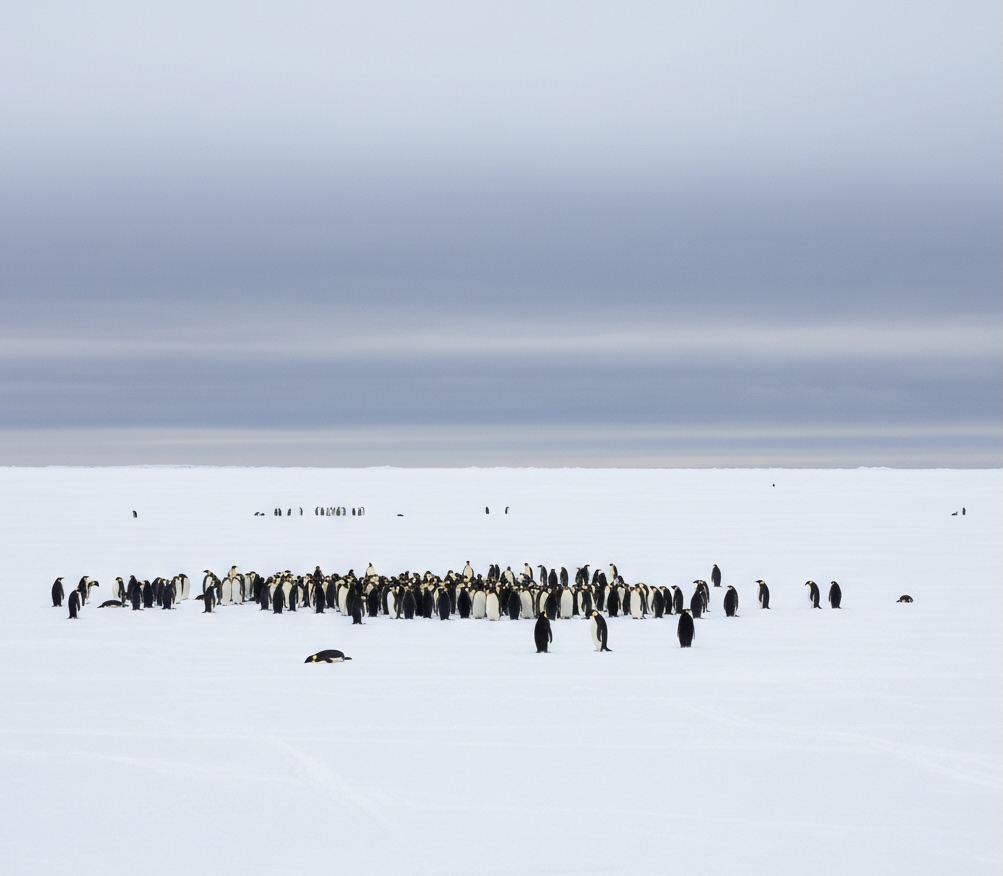
King penguins — the second-largest penguin species — require a South Georgia Island extension; Poseidon Expeditions, Quark, and several others offer these itineraries. The most coveted sighting is the emperor penguin, accessible only via the Weddell Sea (Snow Hill Island area) — a route operated by Ponant's Le Commandant Charcot and select Quark departures under favorable ice conditions. Wildlife access varies by season, year, and ice conditions, and no operator can guarantee specific species encounters.
Frequently Asked Questions
What is IAATO and why does it matter when choosing an Antarctica cruise?
IAATO — the International Association of Antarctica Tour Operators — is the industry self-regulatory body founded in 1991 to promote safe, environmentally responsible travel to Antarctica. Membership is voluntary but has become the industry standard: reputable operators hold it, and its absence should be a red flag.
IAATO's most operationally significant rule limits shore landings to 100 passengers at any single site simultaneously, and prohibits vessels carrying more than 500 passengers from landing guests at all. This rule directly shapes the small-ship expedition model: ships carrying 100 or fewer guests can conduct single-group landings; ships between 100 and 500 passengers must rotate groups. IAATO also enforces biosecurity protocols, wildlife approach distances, and mandatory pre-landing briefings. All 10 operators in this guide are active IAATO members.
What is the Fly the Drake option, and which companies offer it?
The Fly the Drake option replaces the 48-hour sea crossing of the Drake Passage with a 2-hour charter flight from Punta Arenas, Chile, to King George Island in the South Shetland Islands. From there, passengers board their expedition vessel directly at the Antarctic threshold. The Drake return trip is similarly replaced with a flight, meaning the entire ocean crossing in both directions is bypassed.
This option adds approximately $2,000–$5,000 to the cost of a voyage depending on operator, but is valuable for travelers with tight time windows (8–10 day total trips), those prone to seasickness, or those who simply prefer to concentrate all available days in Antarctic waters. Operators currently offering Fly the Drake departures include Antarctica21 (its core product), Quark Expeditions, and Lindblad Expeditions on select itineraries.
How much does an Antarctica cruise cost in 2026?
Antarctica expedition cruise prices in 2026 range from approximately $6,000 to $80,000+ per person, depending on operator, vessel, cabin category, itinerary length, and whether optional activities are included.
Most prices are per person in a double cabin. Solo travelers typically pay a single supplement of 25–75%. Optional activities (kayaking, camping, diving) are usually charged separately — confirm what is included before booking.
What is the best time of year to visit Antarctica?
The Antarctic cruise season runs from late October to late March. Each window offers different wildlife and landscape conditions:
October–November (early season): Pristine snow, penguin courtship and nest-building, sea ice still present in many channels. Coldest temperatures, most dramatic scenery.
December–January (peak season): 20+ hours of daylight, penguin chicks hatching, most accessible landings. Highest demand and prices.
February–March (late season): Peak humpback whale and leopard seal activity, penguin chicks fledging. Warmer, landscapes more varied. Ice pack begins reforming in March.
For first-time visitors with flexibility, December–January offers the most reliably active wildlife experience. For whale enthusiasts, February is optimal.
Which Antarctica cruise company is best for small ship expeditions?
For genuine small-ship expedition credentials, Poseidon Expeditions (M/V Sea Spirit, 114 passengers, all ashore simultaneously), Antarctica21 (Magellan Explorer, ~76 passengers), and Heritage Expeditions (~100 passengers) operate the smallest vessels in the market. All three maintain IAATO-compliant group sizes for simultaneous shore landings.
Poseidon's specific operational design — all 114 guests ashore simultaneously, with up to three landings or activities per day, each 2.5 hours long — makes it the leading choice for travelers who prioritize maximum time ashore. Aurora Expeditions and Oceanwide Expeditions also operate genuinely small ships relative to cruise industry norms, in the 100–130 passenger range, with strong expedition programming.
What activities are included versus charged extra on Antarctica cruises?
Typically included: All Zodiac landings and cruises, guided shore walks, onboard lectures and presentations, all meals, port fees and IAATO levies.
Typically charged as add-ons: Sea kayaking (usually $150–$400 per session), overnight camping on the continent ($150–$300), scuba diving (Aurora Expeditions; requires certification), helicopter flightseeing (Quark Ultramarine; $250–$600 per flight), skiing and ski mountaineering, stand-up paddleboarding.
Some operators (notably Ponant on certain itineraries, and some Quark packages) offer all-inclusive pricing that bundles optional activities. Confirm the pricing structure directly with the operator before finalizing a booking, as it can materially affect total cost.
Ready to Book Your Antarctica Expedition?
Every operator on this list runs IAATO-certified, expedition-grade voyages to one of the world's last truly wild places. Visit their websites directly to compare itineraries, cabin categories, and upcoming departure dates — prices and availability change seasonally.